
While China is bigger and feels mightier at the moment, Beijing's rulers would be well advised not to be tempted to provoke India, for that would only trigger a chain reaction around the world that would not serve anyone's interests, says Sanjaya Baru.

India has made a good beginning in the area of satellite navigation but still there is a long way to go.
An airport in Noida could lead to higher user fees and diversion of traffic from Delhi, which has huge unused capacity.

'I want to use my music to reach out to the youth, to inspire them to create history.' 'To share knowledge, to tell them the importance of voting, girl child education, menstrual hygiene.'

Is North Korea really dismantling its nuclear programme? Rajaram Panda explains the many challenges to denuclearise the Korean Peninsula.

'If you destroy the assets in Pathankot, you degrade the combat potential of India; you degrade the war potential of India.'

'Biometric Aadhaar-based surveillance is not only about violation of privacy, but also about the treasure hunt for unprecedented financial surveillance and economic intelligence in the economic history of mankind,' asks Gopal Krishna.
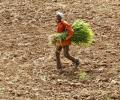
In spite of Budget's rural focus, the government has consistently stumbled in agriculture, says Shreekant Sambrani.

Indian economy about to take-off

Why Dalit leaders cross over to the BJP

'Indira Gandhi proved herself a great war leader, but failed as a statesman,' says Colonel Anil A Athale (retd).
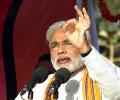
'Both reflect prejudice and short-sightedness peculiar to Mr Modi's way of thinking.'

Since many of Modi's urban policies were initiated in Ahmedabad, the city may act as a template to examine what can be expected in a country that is witnessing the biggest migration from rural to urban areas in the world

It is rare for communal riots to spread to rural areas. The UP riot is the first time after the September 1969 Gujarat riots that a rural area have been affected. Electoral politics which divide society in majority/minority, going on since the early 1990s, is a major contributing factor to this heightened tension between communities, says Colonel (retd) Anil Athale in the first of a two part series.

ITC is one of those few enterprises in the world that has traversed a 100 year journey and has yet managed to remain contemporary, relevant and competitive.

President Pranab Mukherjee on Monday addressed the first joint sitting of Parliament as mandatorily required under the Constitution after the general elections. The address is the political, economic and foreign policy road map of the Narendra Modi government and covers virtually all crucial areas.

What the new defence minister does with the Rafale fighter jet deal will decide if India wants to build genuine, long-term defence capability through an indigenous product that slashes life-cycle costs, or opt for glitzy signing ceremony with foreign vendors that would please the public, says Ajai Shukla.

Friends and colleagues pay rich tributes to the "charming, approachable, and very accessible" Indian Constitution scholar Granville 'Red' Austin.

As Chinese army incursions continue to recur, India has cautioned China that any disturbance of peace and tranquility in the border areas can vitiate the overall atmosphere of bilateral ties.

'It is a pattern of behaviour of the Chinese that whenever a Chinese leader visits India or an Indian leader visits China, some incidents take place.' 'When Modi visits China, we should look out for some similar demonstration by the Chinese.'

Vivek Gambhir revels in his two-city life between the Godrej-owned flagship in Mumbai and his own family in New Delhi.

A group of retired civil servants also called upon the PM to reach out to the families of the victims in Unnao and Kathua and "seek their forgiveness on behalf of all of us".

Bank credit growth, still sluggish, could see a rise if the Reserve Bank of India decides to cut interest rates, believes Ashima Goyal.

Describing America as India's "vital partner", Prime Minister Narendra Modi on Thursday embarked on his first visit to the US confident that his five-day trip will mark a "new chapter" in bilateral strategic ties.
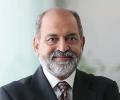
The former McKinsey India head is presently on board of many big Indian conglomerates.

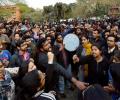
The State is trying to curb the students movements, therefore, there are suspicions against some of the Subramanian report on education's recommendations, says Mohammad Sajjad.

'Indians are great savers, but they are lousy investors.'

'India is no longer the India of the '70s and the '80s.' 'It's a large country with the fastest growing economy.' 'In working with India, you just can't go and humiliate the nation publicly.' USIBC President Mukesh Aghi tells Aziz Haniffa/Rediff.com about how he advises American companies to do business with India, what he thinks of Modi's government and the way forward for the India-US relationship.

With over 135 news channels, about a third owned by politicians and real estate guys, the news TV market is a nightmare, says Vanita Kohli-Khandekar.
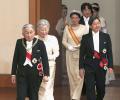
The emperor has no political power, yet he enjoys a unique place in Japanese society, notes Dr Rajaram Panda.
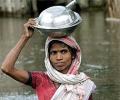
The local labour force is streaming out of the region, creating a vacuum that makes it easier for the Bangladeshis to fill in, says R N Ravi

In an online chat with readers overseas education consultant NNS Chandra addressed queries related to US admissions.

'Your constant reiteration on the lack of religious freedom in India has sown doubts about the kind of information that you are being fed and based on which you seem to be making adverse references to India and its tradition of religious tolerance.'

Prime Minister Narendra Modi's visit to Myanmar is aimed at transforming the arch of Bay of Bengal into the Circle of Southeast Asia, says Anirban Ganguly.

After weighing all the costs and benefits, the next administration is likely to reduce and restructure assistance to Pakistan but not to end it altogether, says Daniel S Markey.

The decision marks first successful policy intervention.

India has made a remarkable journey from a top-down system of economic decision-making to one that unleashed our entrepreneurial spirits but the next big jump lies in enhancing the quality of our tale.

20 years ago this day, May 11, 1998, India conducted its second nuclear test at Pokharan in Rajasthan. In a fascinating interview on Rediff.com, K Subrahmanyam revealed how Indian PMs reacted to nuclear ambitions.

Cashi Crisis: Day 9: Aaj ki Taaza Khabar!
